Discover the graft and craft of working-class Brum with three experiences for one ticket.
Victorian Birmingham didn’t become the “Workshop of the World” by accident. It was built by thousands of skilled workers, bustling workshops and a network of canals that connected the city to the world. On this unique guided experience, you’ll uncover the stories of the people whose hard work forged Birmingham’s industrial reputation.
Your journey begins at The Roundhouse – a striking crescent-shaped Victorian depot built to keep Birmingham moving. Once filled with horses, carts and engineers, it played a vital role in transferring goods between canal, rail and road. Although the Visitor Centre is closed, the tour of the Roundhouse lives on thanks to former Roundhouse Volunteers, passionate about sharing its remarkable history.
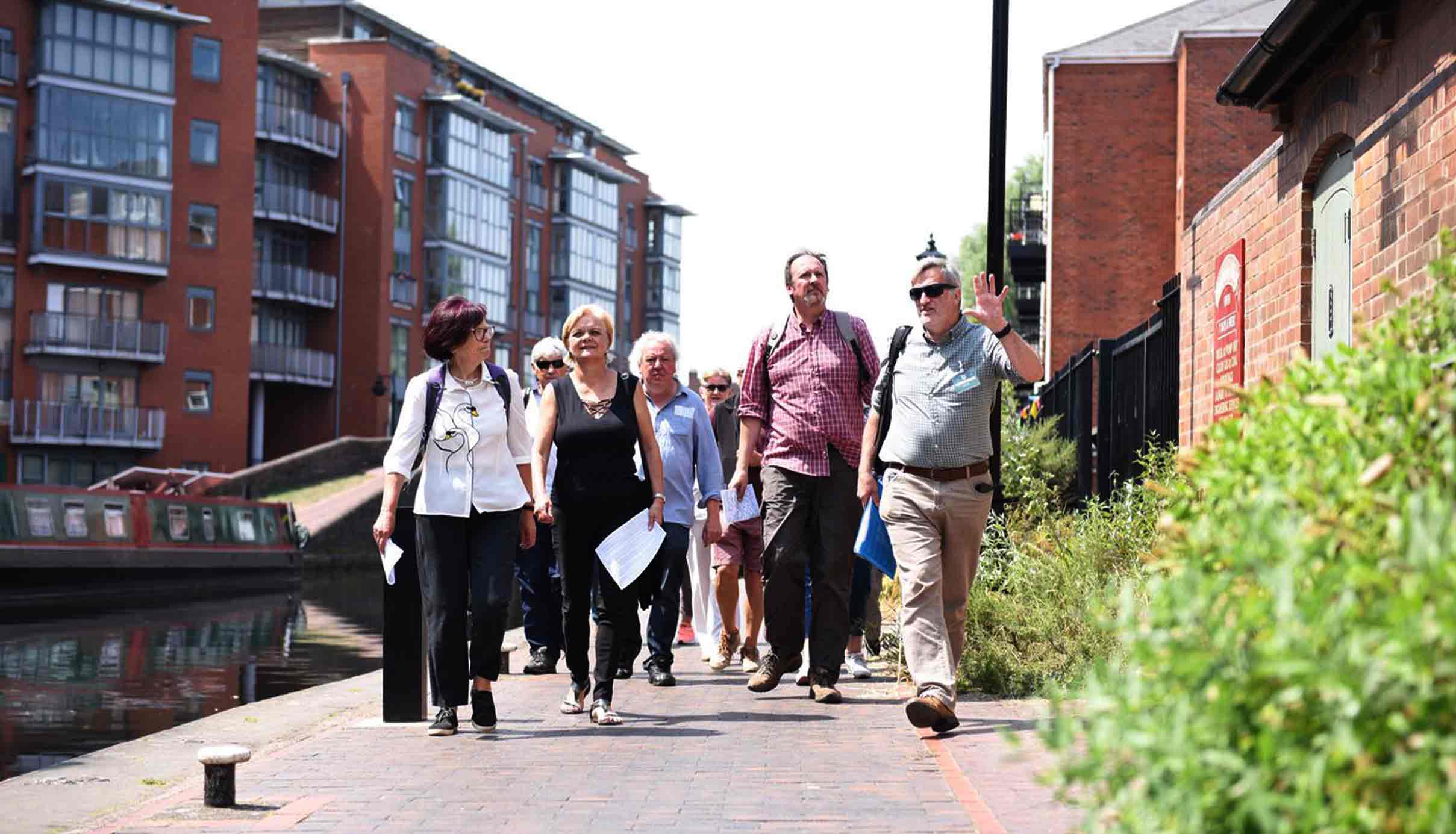
From the Roundhouse, follow the canal towpaths on a guided walk through Birmingham’s industrial landscape. Often said to have more miles of canal than Venice, these waterways fuelled the city’s growth, carrying raw materials, finished goods and opportunity into the heart of Britain’s manufacturing powerhouse.
Your experience concludes at the Coffin Works, where you’ll step inside one of Birmingham’s best-preserved Victorian factories. Explore the atmospheric Stamp Room and discover the machinery and people behind the city’s world-famous metalworking industries.
What’s included?
40-minute guided tour of The Roundhouse
40-minute guided canal walk
40-minute guided tour of the Coffin Works’ Stamp Room
A fully guided experience from 1pm–3pm
15% off drinks and sweet treats in the Coffin Works café after your tour
On the day you’ll be provided with a headset so you can hear the guide clearly throughout the tour, even in the bustle of the city. The tour finishes at approximately 3pm at the Coffin Works in Birmingham’s Jewellery Quarter
– Tours will go ahead in all but the worst weather
– Please wear sensible shoes and dress for the outdoors
– Wheelchair users welcome – please note that the walk includes sections along the canal and over cobbled surfaces, which may be uneven in places.
Organised by The Coffin Works Museum